We do pioneering basic research. 500 curiosity-driven scientists from over 50 countries ask: How do cells form tissues? Our research programs span multiple disciplines from biology, physics, mathematics and computer science.
The MPI-CBG employs a multidisciplinary approach to understand the basic mechanisms behind fundamental processes like cell division, adhesion, polarity, cell-cell interactions, cytoplasmic organization, intracellular transport, and membrane trafficking. In addition to studying living organisms, we work with reconstituted systems in a petri dish made up from key components, such as molecules or cells. This approach allows us to explore how complex behaviors arise from their interactions.
more
We take a physics-based approach to biological questions to unravel principles that underlie the self-organization of living matter. Of key interest are the mechanisms by which structure and form arise in biological systems. Combining experiments with theory, we focus on how chemistry and mechanics interact to generate self-organized patterns. We bridge the gap between the molecular and tissue scales, and uncover the biophysical principles that underlie structure forming processes in living systems across scales.
more
Living systems are complex and multiscale. At the MPI-CBG, we develop new mathematical approaches, including topological data analysis, computational algebra and metric geometry, as well as novel computational methods and artificial intelligence (AI) applications to extract structure and meaning from the vast amount of data available. This enables a quantitative understanding of the emergence of dynamics, structure, and function in living systems.
more
We are studying complex biological and biophysical processes in living organisms and in re-engineered tissues outside of the living body by developing and growing organoids in a petri dish. We combine classical animal models with organoids, three-dimensional structures that resemble organs ex vivo, with the ultimate goal of studying the underlying molecular and cellular principles driving development and regeneration as well as diseases and their causes. This knowledge holds the potential to inform future organ-specific therapies.
more
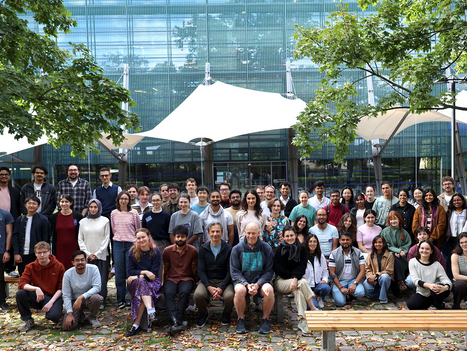
Interdisciplinary mini-course taught by Rob Phillips and Jané Kondev
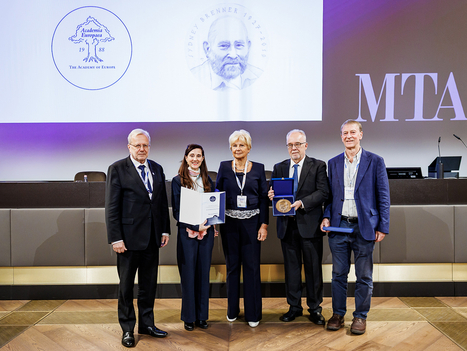
Academia Europaea award for achievements in the Life Sciences for MPI-CBG director
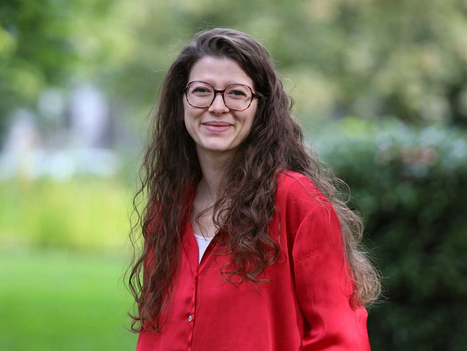
Funded project will explore how interactions between cells shape developing human pancreas.
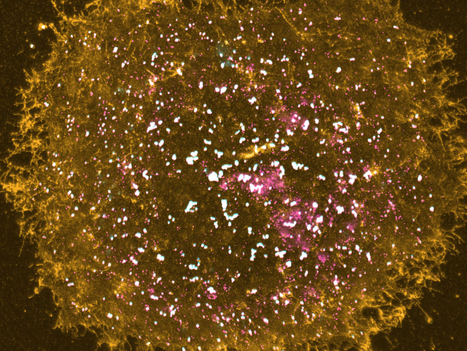
Study reveals that a major membrane transport route into the cell – called clathrin-mediated endocytosis - sorts proteins but not lipids. Lipids use…
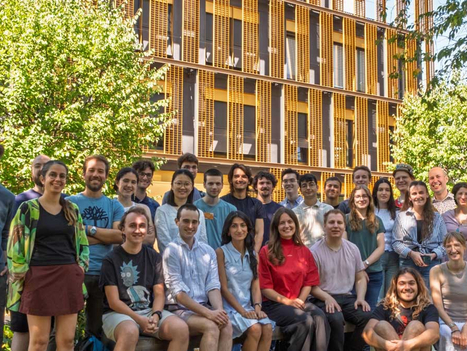
Summer School on Combinatorial Structures in Algebraic Statistics and Game Theory
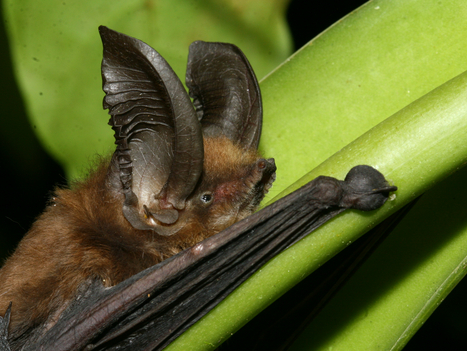
Study finds that bats most likely originated in Europe around 65 million years ago, before spreading across the world. 30 bat genomes for the study…
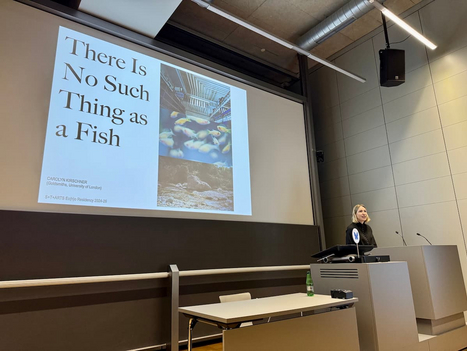
Science and art meet at film screening at MPI-CBG
Interdisciplinarity of the MPI-CBG reflected in updated name of International Max Planck Research School
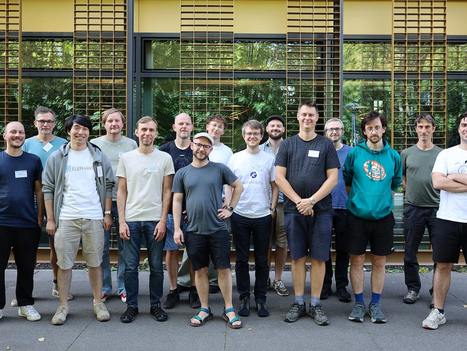
OME-Zarr Hackathon brings together bioimaging community for collaborative development.