
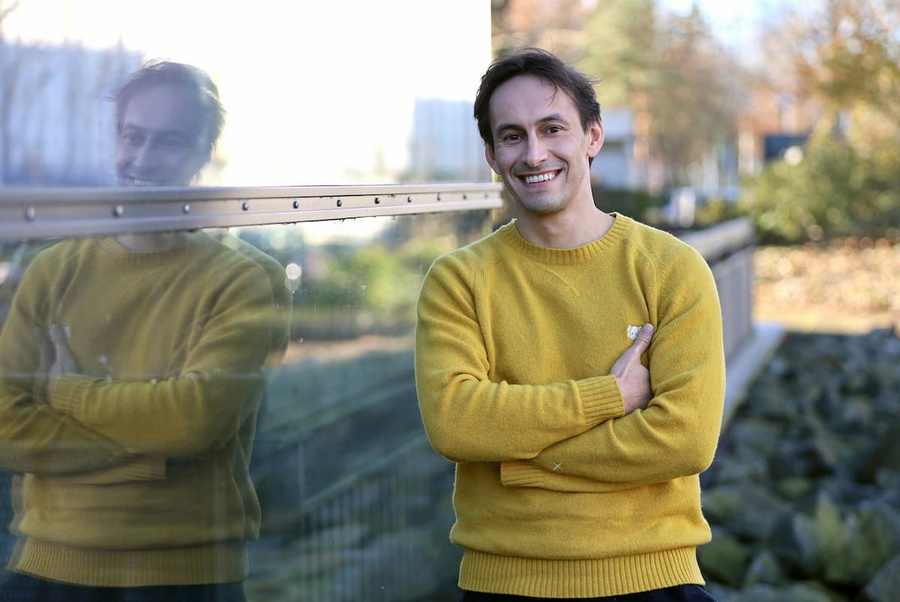
© Katrin Boes / MPI-CBG
The International Human Frontier Science Program Organization (HFSPO) has announced the 2026 winners for the Research Grant applications. Jesse Veenvliet, research group leader at the Max Planck Institute of Molecular Cell Biology and Genetics (MPI-CBG), received one of the highly prestigious and competitive HFSP Research Grants-Program for his collaborative project “Control of mammalian embryo patterning and morphogenesis by opto-electrochemical gradients.”
Congratulations, Jesse!
This year, the HFSPO awarded research grants to 117 of the most pioneering scientists from 31 nations, supporting the top 3% of the HFSP research grant applicants. “HFSP Research Grants provide the world’s top scientists with the means to collaborate across borders and explore new frontiers and discover whole new worlds of possibilities,” said Pavel Kabat, HFSPO Secretary-General.
HFSP is truly unique in supporting bold projects that push across traditional boundaries to tackle key outstanding questions in biology. I’m delighted that the reviewers and committee were as enthusiastic about our ambitious ideas as we are. It’s an honor to be part of the HFSP community, and I’m really looking forward to carrying out this dream project with an amazing team.
-Jesse Veenvliet
Jesse Veenvliet shares his award with two international colleagues: Eric Glowacki (Central European Institute of Technology CEITEC, Brno University of Technology, Czech Republic) and Berna Sozen (Yale University, USA). With their joint project, the team of researchers want to investigate the role of metabolic gradients in embryonic development – a complex and precisely coordinated process, influenced by a combination of genetic instructions and signals from the environment surrounding the developing cells. Building on a revived early 20th-century concept that metabolic activity can generate spatial patterns guiding development, the researchers aim to find out whether oxygen and hydrogen peroxide, a byproduct of oxygen metabolism, act as signaling cues that shape and pattern the embryo. Using a combination of experimental embryology, quantitative microscopy, stem-cell-based embryo models, and cutting-edge electrochemical tools, they seek to systematically measure and manipulate these molecules to reveal how metabolic signals work in concert with genetic instructions to guide the formation of the body plan, such as the head-to-tail axis.
Research Grants-Program and Research Grants-Early Career provide three years of support for international teams involving at least two countries. All team members are expected to broaden the character of their research compared to their ongoing research programs and interact with teams bringing expertise that is very different from their own so as to create novel approaches to problems in fundamental biology.
This year, 6 Research Grants - Early Career and 28 Research Grants - Program were awarded from a total of 1121 letters of intent, 81 of which were selected for a full proposal and submitted their application.
Congratulations to all 2026 winners!