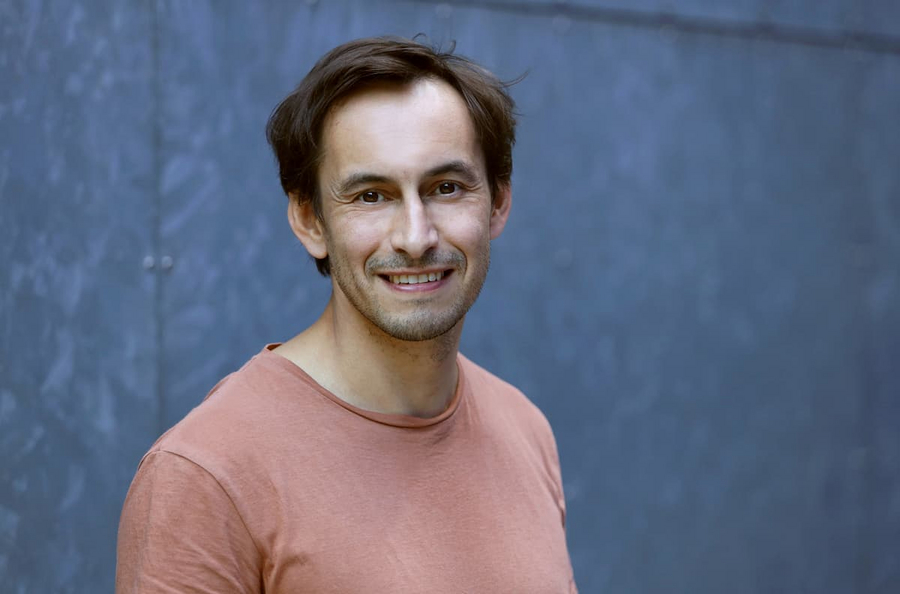
Jesse Veenvliet © Katrin Boes / MPI-CBG
With the 2026 GSCN Awards, the German Stem Cell Network (GSCN) honors three outstanding scientific achievements and individuals who demonstrate the diversity and future potential of stem cell research. What unites this year’s awardees is their ability to look beyond the boundaries of individual disciplines: They seek to understand how cells develop and maintain their identity, how tissues and organs form, and how this knowledge can be harnessed for medicine.
Maike Sander combines scientific excellence with outstanding responsibility in scientific leadership and is an important role model for women in science.
Jesse Veenvliet investigates as an early-career scientist fundamental mechanisms of cell and organ development, opening new perspectives on how complex biological systems emerge.
Annika Zink and Alessandro Prigione demonstrated in their publication in Cell, how patient-derived stem cell models can accelerate the search for treatments for rare diseases. Their research spans iPSC-based disease models, brain organoids, and drug screening extending all the way to the first individualized treatments for patients with Leigh syndrome.
Together, the three award-winning scientists exemplify research that seeks to understand fundamental biology, unlock new possibilities, and ultimately make a tangible difference. The 2026 GSCN awardees will present their research at the GSCN Conference 2026 in Berlin.
The GSCN 2026 Young Investigator Award goes to Jesse Veenvliet of the Max Planck Institute of Molecular Cell Biology and Genetics in Dresden.
The GSCN 2026 Hilde Mangold Award goes to Maike Sander of the Max Delbrück Center in Berlin.
The GSCN 2026 Publication of the Year Award goes to Annika Zink, Alessandro Prigione, Ole Pless, Markus Schuelke, Annika Wittich, et al. for their publication, “Pluripotent stem-cell-based screening uncovers sildenafil as a mitochondrial disease therapy” published in Cell on March 19, 2026.
Jesse Veenvliet, research group leader at the Max Planck Institute of Molecular Cell Biology and Genetics (MPI-CBG) in Dresden, receives the GSCN 2026 Young Investigator Award. With this award, the German Stem Cell Network recognizes an outstanding early-career scientist whose innovative work with stem-cell-based embryo models is helping uncover fundamental principles of embryonic development.
Veenvliet studies how cells organize themselves during early development to pattern and shape the mammalian embryo. His team develops stem cell-based embryo models — three-dimensional cellular systems that make it possible to investigate key developmental processes under controlled laboratory conditions — and uses quantitative approaches to reveal how complex biological organization emerges during embryonic development.
A major contribution of his work has been the development of stem cell-derived trunk-like structures that reproduce key features of the developing embryonic trunk, alongside strategies to identify and control the biological processes underlying phenotypic variation in embryo models, helping to make these systems more reproducible and embryo-like. His group combines developmental and stem cell biology with quantitative imaging, omics, biophysics, and data science to uncover principles that govern the robust formation of the mammalian body plan, focusing on the role of the physiological microenvironment.
Jesse Veenvliet leads a Max Planck Research Group at the MPI-CBG since 2021 and is also associated with the Physics of Life Cluster of Excellence at TU Dresden and the Center for Systems Biology Dresden. In 2025, he was elected to the EMBO Young Investigator Programme. Beyond his research, Veenvliet is actively engaged in public and interdisciplinary discussions about the societal and ethical dimensions of stem-cell-based embryo models and their responsible use.
-
Maike Sander, Scientific Director and Chair of the Board of the Max Delbrück Center in Berlin receives the GSCN 2026 Hilde Mangold Award. With this award, the German Stem Cell Network (GSCN) honors an internationally outstanding scientist whose research has made major contributions to the understanding of the development and function of insulin-producing beta cells, and who has demonstrated exceptional scientific and institutional leadership.
Through her research, Maike Sander has gained fundamental insights into pancreatic development, beta-cell plasticity, and regenerative strategies for diabetes. A particular focus of her work is understanding how beta cells can be generated from stem cells and how this knowledge can be harnessed for future therapeutic applications.
In addition to her scientific achievements, Sander plays a prominent role in shaping and advancing biomedical research. She is Scientific Director and Chair of the Board of the Max Delbrück Center in Berlin and also serves as Vice President of the Helmholtz Association for the research field Health, which brings together the expertise of more than 9,000 researchers and professionals across six Helmholtz Health research centers.
Through her achievements in research and her commitment to scientific leadership, Maike Sander embodies a unique combination of scientific excellence and institutional responsibility. As an accomplished scientist and leader, she is also an important role model for women in science, demonstrating how excellence in research can go hand in hand with taking on responsibility and shaping the future of science.
Maike Sander:
Maike Sander studied medicine at Heidelberg University and completed her scientific training at the University of California, San Francisco (UCSF). After holding positions at the University of California, Irvine, and the University of California, San Diego (UCSD), where she established an internationally recognized research program on the biology and regeneration of insulin-producing beta cells, she returned to Germany in 2022. Her research has made major contributions to understanding beta-cell development and plasticity and to developing new strategies for beta cell regeneration and the treatment of diabetes. Her scientific achievements have been recognized with numerous honors, including the Humboldt Research Award, the Grodsky Award from the Juvenile Diabetes Research Foundation, and the 2022 Albert Renold Prize from the European Association for the Study of Diabetes. She is a member of several prestigious scientific academies and societies, including the German National Academy of Sciences Leopoldina and EMBO. Since November 2022, she has served as Scientific Director and Chair of the Board of the Max Delbrück Center in Berlin. In 2025, Maike Sander also took on the role of Vice President of the Helmholtz Association for the research field Health, where she contributes to shaping the strategic direction of health research across the Helmholtz Association.
-
The GSCN 2026 Publication of the Year Award goes to Annika Zink, Alessandro Prigione, Ole Pless, Markus Schuelke, Annika Wittich, et.al. for their 2026 Cell publication, “Pluripotent stem-cell-based screening uncovers sildenafil as a mitochondrial disease therapy”. The study demonstrates how patient-derived stem cell models can accelerate the search for treatments for rare diseases and help translate discoveries from the laboratory toward clinical application.
The research focuses on Leigh syndrome, a severe inherited mitochondrial disorder that typically develops in childhood. There is currently no approved drug treatment for the disease. Research into rare diseases such as Leigh syndrome is particularly challenging because of small patient numbers and suitable disease models.
To overcome these challenges, the international research team generated induced pluripotent stem cells (iPSCs) from patients and used them to produce neural cells and three-dimensional brain organoids and to test those with more than 5,500 drugs. They identified PDE5 inhibitors and ultimately sildenafil as a particularly promising therapeutic candidate. Its beneficial effects were subsequently confirmed in brain organoids and animal models.
Most notably, the research progressed from stem cell models toward patient treatment. Sildenafil was used on an individual basis in six patients with Leigh syndrome, with the study reporting improvements in motor function and resistance to metabolic crises. Based on these findings, the European Medicines Agency granted sildenafil Orphan Drug Designation, and a multinational placebo-controlled clinical trial is being planned to further assess its safety and efficacy in patients with Leigh syndrome.
With the GSCN 2026 Publication of the Year Award, the GSCN recognizes a study that exemplifies the translational potential of stem cell research: patient-specific cellular models can provide new insights into disease, enable systematic drug discovery, and open new therapeutic avenues for patients with rare and currently difficult-to-treat disorders.
Read the publication "Pluripotent stem-cell-based screening uncovers sildenafil as a mitochondrial disease therapy" in Cell 189(6), 1656–1679.e42, DOI 10.1016/j.cell.2026.02.008.
Further information on the GSCN awards and the award recipients can be found here: www.gscn.org/scientific-resources/german-stem-cell-network-awards
The three GSCN awards each carry a prize of €1,500, and the award recipients will give a presentation as part of the Presidential Symposium at the GSCN Conference in Berlin on Thursday, 10 September 2026.